
business
Morocco’s Push for Digital Inclusion: Satellite Internet Providers Like Starlink and OneWeb on the Horizon


Morocco is taking significant strides towards enhancing digital inclusion and advancing its technological infrastructure, with efforts underway to permit satellite internet providers like Starlink and OneWeb to operate within the country. These initiatives are part of Morocco’s broader strategy to bridge the digital divide and expand high-speed internet access to underserved and remote areas, potentially transforming the nation’s connectivity landscape.
Satellite Internet as a Game Changer
The introduction of satellite internet services could be a game changer for Morocco, particularly in addressing the connectivity challenges faced by rural and remote communities. While urban areas in Morocco enjoy relatively robust internet infrastructure, many rural regions still struggle with inconsistent and slow connectivity. By considering the integration of satellite internet providers such as Elon Musk’s Starlink and the UK-based OneWeb, Morocco is aiming to ensure that even its most isolated communities have access to reliable, high-speed internet.
Satellite internet has the potential to provide a seamless, affordable, and scalable solution for connecting areas that are otherwise difficult or costly to serve through traditional fiber-optic or mobile networks. The satellite-based model leverages a network of low-Earth orbit (LEO) satellites to deliver high-speed internet, bypassing the need for extensive terrestrial infrastructure. This approach could significantly enhance Morocco’s ability to meet its digital inclusion goals and empower communities that have long been left out of the digital revolution.
A Step Toward Technological Advancement
The Moroccan government has been exploring various strategies to promote digital inclusion and accelerate technological advancement. By potentially granting permissions to Starlink, OneWeb, and other satellite internet providers, Morocco is demonstrating a commitment to modernizing its telecommunications sector and creating an environment conducive to innovation and growth. This initiative aligns with Morocco’s Vision 2030 plan, which seeks to foster a digital economy, promote e-governance, and enhance access to education and healthcare through technological solutions.
The potential entry of satellite internet services into the Moroccan market could also stimulate competition among internet service providers, encouraging greater investment in infrastructure and ultimately leading to better service quality and lower costs for consumers. Such a development would not only benefit individuals and households but also small businesses and startups that rely on stable internet connections to thrive in the digital economy.
Regulatory Considerations and Challenges
While the prospects for satellite internet in Morocco are promising, there are regulatory hurdles that need to be addressed before services like Starlink and OneWeb can commence operations. The Moroccan National Telecommunications Regulatory Agency (ANRT) has been evaluating the regulatory framework for satellite internet services, considering issues such as frequency allocation, licensing requirements, and coordination with existing telecom operators.
Additionally, the government is mindful of the need to strike a balance between embracing new technologies and ensuring fair competition in the market. Discussions are underway to ensure that the entry of satellite internet providers complements, rather than disrupts, the existing telecommunications ecosystem in Morocco. It will be crucial for authorities to navigate these regulatory challenges in a manner that supports innovation while maintaining market stability.
Implications for Digital Inclusion
The potential arrival of satellite internet providers in Morocco could have profound implications for the country’s digital inclusion efforts. Access to high-speed internet is increasingly viewed as a fundamental right, critical to participation in the modern economy and society. For many rural and remote communities, satellite internet could provide the connectivity needed to access educational resources, healthcare services, and e-government platforms, thereby improving quality of life and reducing socio-economic inequalities.
Furthermore, the expansion of internet access through satellite technology could support Morocco’s ambitions to become a regional technology hub in North Africa. By investing in infrastructure that connects its entire population, Morocco is not only empowering its citizens but also positioning itself as an attractive destination for tech investments and startups, particularly those focused on the digital economy and innovation.
Conclusion
Morocco’s efforts to embrace satellite internet providers such as Starlink and OneWeb underscore the country’s commitment to digital inclusion and technological progress. By leveraging the potential of satellite technology, Morocco aims to bridge the digital divide, enhance connectivity across the nation, and pave the way for a more connected, inclusive, and innovative society. As regulatory discussions continue, the nation stands on the brink of a transformative shift in its telecommunications landscape, one that could bring lasting benefits to its people and its economy.

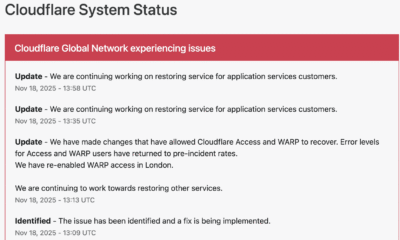





Verizon announced a sweeping workforce reduction that will affect “more than” 13,000 employees — roughly 13% of its global headcount — in what CEO Dan Schulman calls the company’s largest-ever layoff. In an internal memo, Schulman says the move is intended to “simplify our operations to address the complexity and friction that slow us down and frustrate our customers.” The company also plans to cut outsourced and outside labor costs significantly. U.S.-based staff will begin receiving notifications today; employees outside the U.S. will be informed in the “coming weeks,” the Wall Street Journal reports
What Verizon says
- Reason: operational simplification and removing friction that hurts customer experience.
- Scale: “more than” 13,000 roles, about 13% of the workforce.
- Outsourcing: a significant reduction in outsourced and outside labor spending is part of the plan.
- Timing: U.S. notifications begin immediately; international notifications will follow.
Immediate impact
- Employees: tens of thousands will be affected directly or indirectly. U.S. notifications beginning today means many workers will learn their status immediately.
- Operations: Verizon says the goal is to reduce complexity and improve service — but short-term disruption to teams and projects is possible as roles are consolidated.
- Customers: Verizon frames the change as a way to speed decision-making and improve customer experience, though execution risk exists during the transition.
- Outsourced partners: vendors and contract workers can expect renegotiation or reductions.
What affected employees should do now
- Check official communications from HR and your manager for next steps and severance details.
- Ask about outplacement support (resume help, job counseling) and whether the company offers extended healthcare, COBRA assistance, or phased transitions.
- Document your work (accomplishments, repos, access) and secure personal copies of non-sensitive materials.
- File for unemployment as soon as possible where eligible and update LinkedIn and your network.
- Use company resources (employee assistance programs, career centers) and local talent services.
What managers and the company should prioritize
- Clear, compassionate communications and FAQs for affected employees.
- Fast, transparent explanation of severance, benefits continuation, and outplacement services.
- Careful workload redistribution and project continuity plans to avoid customer impact.
- A public-facing message to reassure customers and investors about service continuity and long-term strategy.
Market and strategic context (what this implies)
- Verizon is attempting aggressive cost reduction while refocusing on product and service quality (e.g., 5G, fixed wireless, enterprise services).
- Cutting outsourced labor and internal layers can reduce costs but carries execution risk: lost institutional knowledge, lowered morale, and short-term productivity dips.
- Investors may welcome lower operating expenses; customers and regulators will watch for service degradation.
Rabat — October 2025
Inside Morocco’s Parliament, tension and reflection filled the air just hours after His Majesty King Mohammed VI delivered his opening-session speech. What was meant as a national roadmap quickly turned into a day of open confrontation, emotional testimonies, and unexpected admissions from members of both majority and opposition blocs.
🏛️ A Speech That Touched Nerves
The King’s address, described by analysts as “direct and reform-oriented,” called for greater social justice, job creation, and balanced development across Morocco’s regions.
“No village left forgotten, no coast without a hand,” the King declared — a message that resonated deeply with citizens and lawmakers alike.
Within hours, parliamentary corridors buzzed with interviews, arguments, and introspection. Some MPs hailed the speech as “a moral reset,” while others questioned whether the government was capable of turning royal vision into tangible results.
🧠 From Rabat to the Sahara — Gen Z Responds
Younger members of Parliament — labeled as جيل زد (Gen Z) — became the focus of cameras and public curiosity. Many expressed frustration at what they see as a widening gap between political promises and everyday realities faced by Moroccan youth.
“The King spoke about unity and work. We agree — but the youth need a chance to prove themselves,” said one 28-year-old deputy.
“We have the energy; the system just needs to open its doors.”
Another young MP caused a social-media storm after saying that “in some ways, Moroccan social values are stronger than Germany’s.”
Critics accused him of downplaying Europe’s economic strength, while others applauded his pride in Moroccan family cohesion.
He later clarified his words, emphasizing that every nation faces challenges — and that Morocco’s real wealth lies in its people.
💬 Resignation, Reflection, and Responsibility
Just a week earlier, one deputy had submitted his resignation in protest over what he called “a lack of listening to the new generation.”
After the King’s address, he withdrew it.
“The royal speech gave me renewed hope. This is not the time to quit — it’s time to work,” he told reporters.
Across party lines, both RNI and PAM youth wings echoed similar messages: commitment to reform, but also impatience with bureaucracy.
Several MPs criticized ministers who, they said, “do not answer calls, do not reply to written questions, and have lost touch with citizens.”
⚖️ Opposition Voices: ‘A Government in Denial’
Members of the opposition used the session to accuse the cabinet of denial and poor communication, arguing that ministers are “living in a different reality” from citizens struggling with prices and unemployment.
“The royal messages were clear,” said one opposition leader. “The problem is not the King’s vision — it’s implementation.”
🌍 Morocco’s Path Forward
Analysts note that the King’s address aligned with long-standing themes: national cohesion, balanced territorial development, and respect for dignity in public service.
But the 2025 context — economic pressure, youth disillusionment, and the digital activism of Gen Z — gives these calls new urgency.
“This generation communicates differently,” said a policy researcher. “If institutions don’t adapt, they’ll lose credibility.”
🕊️ A Message Beyond Politics
As the parliamentary session ended, one young MP summed up the mood:
“الملك تكلّم… ونحن سنُجيب بالعمل — The King spoke, and we will answer through action.”
For now, the chamber that often echoes with partisan debates found itself united — briefly — under a single message:
Morocco’s future belongs to its youth, but responsibility belongs to everyone.
Tata Motors’ luxury brand shuts global IT systems amid suspected ransomware attack; no customer data reported compromised.
Jaguar Land Rover has shut down production and retail systems worldwide after a cyberattack “severely disrupted” operations. A hacking group linked to previous attacks on UK retailers has claimed responsibility. While no customer data appears compromised, the incident halted vehicle registrations and manufacturing, raising fresh alarms about the auto industry’s vulnerability to cyber threats
Jaguar Land Rover Hit by Major Cyberattack
Jaguar Land Rover’s global production and retail operations were brought to a standstill this week after a cyberattack “severely disrupted” its IT systems. The company shut down core applications and suspended manufacturing across key UK plants, including Halewood and Solihull, during one of the busiest sales periods of the year.
The UK’s National Crime Agency has opened an investigation, while the company races to restore operations. JLR confirmed that, as of now, there is no evidence that customer data has been compromise
Immediate Disruption to Plants and Dealers
The September 2 cyber incident forced JLR, owned by India’s Tata Motors, to halt assembly lines, send staff home, and suspend dealer systems used to register new vehicles. Dealers reported they could sell in-stock cars but could not process new registrations, delaying deliveries and revenue flows.
A company spokesperson said:
“We took immediate action to mitigate its impact by proactively shutting down our systems. We are now working at pace to restart our global applications in a controlled manner.”
Expert Reactions
Cybersecurity specialists warn the incident highlights the fragility of digitally integrated manufacturing.
Dray Agha, Senior Manager at Huntress, said:
“This incident highlights the critical vulnerability of modern manufacturing, where a single IT system attack can halt a multi-billion-pound physical production line.”
Aiden Sinnott, a researcher at Sophos, compared the attackers’ tactics to those of notorious cyber gangs:
“They speak English and they are keen on using social media channels. Lapsus$ shared similar tactics and demographics as the Scattered Spider collective.”
Technical Analysis
While JLR has not disclosed the specific intrusion method, several indicators suggest ransomware-style tactics:
- Proactive Shutdowns: JLR’s decision to disable IT and OT (operational technology) systems aligns with standard ransomware containment measures.
- Interconnected Impact: The attack disrupted not just IT but entire supply chains, underscoring the risks of tightly linked digital production networks.
- Extortion Motive Likely: Although no ransom demand has been confirmed, past incidents involving JLR and similar industries suggest data exfiltration and extortion are possible.
The incident underscores the importance of segmentation, real-time monitoring, and robust incident response across manufacturing IT and OT systems.
Impact and Response
- Employees: Factory staff in the UK were sent home as assembly lines stopped.
- Dealers & Customers: Dealers could not register new vehicles, delaying customer deliveries.
- Suppliers: Supply chains faced ripple effects, with halted orders and logistics disruptions.
JLR has engaged external cybersecurity teams and is working with government agencies to restore operations in stages. The company must also prepare for regulatory inquiries and possible long-term trust issues with suppliers and consumers.
Broader Context
The cyberattack comes amid a surge in UK corporate cyber incidents. Retailers including Marks & Spencer, Co-op, and Harrods have all suffered breaches in recent months.
For JLR, this is the second major attack in 2025, following a March breach where a ransomware group claimed to have stolen internal data. The company had invested heavily in cybersecurity modernization, including a contract with Tata Consultancy Services—but repeated incidents suggest lingering vulnerabilities.
Conclusion
Jaguar Land Rover’s shutdown highlights the growing risks of interconnected, digital-first manufacturing. In today’s auto industry, downtime no longer means a local setback—it translates directly into lost global revenue and potential long-term reputational harm.
As JLR works to restore its systems, the incident serves as a stark reminder: in modern manufacturing, operational resilience depends as much on cybersecurity as on engineering.
Sources:
Reuters, Britain’s JLR hit by cyber incident that disrupts production, sales;
The Guardian, Hackers linked to M&S breach claim responsibility for Jaguar Land Rover cyber-attack;
Financial Times, Jaguar Land Rover says production ‘severely’ disrupted by cyber incident;
SecurityWeek, Jaguar Land Rover Operations Severely Disrupted by Cyberattack.


New X Feature Reveals Where Users Really Are — And It’s Already Causing Chaos

Verizon Slashes Jobs in Record-Breaking Layoff — Here’s What We Know


